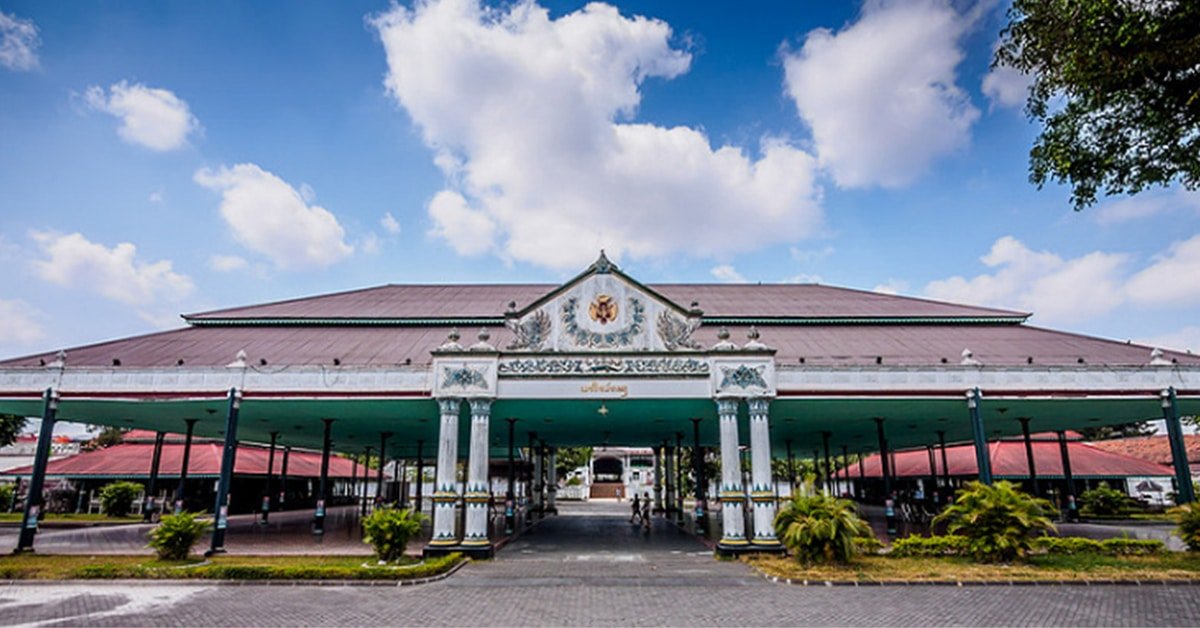
Il Palazzo di Yogyakarta/Keraton Ngayogyakarta Hadiningrat riveste un significato immenso nell'incantevole città di Jogja, rendendolo un elemento inseparabile del suo fascino unico. Questo patrimonio storico e punto di riferimento iconico affascinano i turisti, invogliandoli a intraprendere una visita.
Scavare nelle profondità del Palazzo di Yogyakarta rivela uno scrigno di splendori culturali e tesori storici. Questa abbondanza attira costantemente folle di turisti, rendendo il palazzo una delle attrazioni più ambite di Jogja.
Intraprendere un viaggio al Palazzo di Yogyakarta è senza problemi, grazie alla pletora di pacchetti turistici di Jogja che includono il palazzo come destinazione imperdibile. Prima della vostra visita, permettetemi di presentarvi alcuni punti salienti affascinanti che vi aspettano all'interno dei giardini del palazzo:
Storia del Palazzo di Yogyakarta (Keraton Jogja)
Il Palazzo di Yogyakarta, inizialmente fondato nel 1755 da Sri Sultan Hamengkubuwono I, funge da residenza governativa del Sultanato di Ngayogyakarta Hadiningrat. Questo sultanato fa parte del Mataram islamico, storicamente diviso in due, l'altro è il Sunanato di Surakarta.
Coprendo una vasta area di oltre 184 ettari, il Palazzo di Yogyakarta comprende l'edificio principale noto come Kedhaton e le regioni circostanti, inclusa la residenza del Sultano. Tuttavia, il Kedhaton stesso si estende su circa 13 ettari.
I documenti storici suggeriscono che il Palazzo di Yogyakarta è situato sul terreno dell'ex Garjitawati Guesthouse, un tempo luogo di sosta per le processioni reali in partenza per la sepoltura del re a Imogiri a Bantul. Questa posizione è riconosciuta come il sito importante di Taman Sari, una delle rinomate strutture del palazzo. Un'altra teoria colloca il castello vicino a Umbul Pacethokan, una sorgente immersa in un'affascinante foresta di banyan.
La scelta di questo sito può essere attribuita al sultano Hamengkubuwono I, che meditava presso la pensione Ambar Ketawang, situata nel sottodistretto Gamping di Sleman. Indipendentemente dalle sue origini, il Palazzo di Yogyakarta, ampiamente conosciuto come Keraton Jogja, è un caro punto di riferimento storico e ha ricevuto il riconoscimento dell'UNESCO come sito del patrimonio mondiale.
Prezzi dei biglietti d'ingresso al Palazzo di Yogyakarta
Esplorare il palazzo e sperimentare le sue intriganti attrazioni può essere una spesa gestibile. Puoi divertirti con piacevoli passeggiate attraverso numerose affascinanti zone del palazzo semplicemente investendo qualche migliaio di rupie.
| Punizione | Tariffe |
|---|---|
| Biglietto d'ingresso turistico locale | IDR 15.000,00 |
| Biglietto d'ingresso per stranieri | 25.000,00 IDR |
| Solo parcheggio per moto | IDR 5.000,00 |
| Parcheggio | IDR 10.000,00 |
Esplora la miriade di attrazioni turistiche di Jogja con la comodità di un pacchetto turistico di un'agenzia di viaggi rispettabile. Questo pacchetto all-inclusive ti consente di selezionare le tue destinazioni preferite, sia che desideri un gusto autentico delle delizie culinarie di Jogja o che desideri acquisire souvenir unici di Jogja. Intraprendi un viaggio memorabile, assaporando il meglio di ciò che Jogja offre lasciando la logistica e la pianificazione agli esperti.
Percorso verso la posizione del Palazzo di Yogyakarta
The Yogyakarta Palace, situated on Jl. Rotowijayan Block No. 1, Panembahan, in the Kraton District of Yogyakarta City, is conveniently located just a short distance from the city center. It is approximately 3 km away, allowing for a quick 7-minute journey.
For hassle-free navigation to the Yogyakarta Palace, Google Maps is an excellent tool to assist you in finding the optimal route. Alternatively, suppose you prefer to avoid dealing with the intricacies of navigation. In that case, you can avail the services of a professional driver from a reputable Jogja car rental or a trusted travel agency that offers assistance for individuals seeking a convenient and effortless experience.
Yogyakarta Palace Opening Hours
The operating hours of Yogyakarta Palace vary depending on the day of the week. The palace welcomes visitors from 08.0 WIB to 14.00 WIB from Thursday to Saturday. On Fridays, the opening hours are from 08.30 WIB to 11.00 WIB. However, during weekends, the palace extends its hours and remains open until 17.00 WIB from Friday to Sunday.
It’s important to note that Yogyakarta Palace is closed to the public every Monday. This closure is necessary to ensure the cleanliness and upkeep of the palace area. To make the most of your visit, planning your trip during the dry season is recommended, as this will minimize any potential disruptions caused by rainfall.
Sections of the Yogyakarta Palace
The Yogyakarta Palace, renowned for its meticulous construction, embodies the essence of Javanese architectural principles. One notable feature is its layout, with buildings and areas thoughtfully arranged from north to south.
Initially, the Yogyakarta Palace was enclosed by the Cepuri or Baluwarti walls, which delineated much of its premises. Today, remnants of these walls, referred to as Jokteng, can still be observed in Jogja.
Regarding its architecture, the palace exhibits a blend of traditional styles infused with subtle European influences, evident in certain embellishments. Most structures within the Yogyakarta Palace complex are joglo, each distinguished by distinct characteristics.
Joglos without surrounding walls is commonly known as Bangsal, while those encompassed by walls are often called Gedhong. Additionally, there are buildings featuring only pillars and a roof, resembling canopies, known as Tratag.
The Yogyakarta Palace’s layout is divided into several sections from north to south. Below, you’ll find a selection of unique complexes and architectural marvels surrounding the Yogyakarta Palace that are highly recommended for exploration:
Gapura Gladag-Pangurakan

The Pangurakan Gate, situated on the northern side of the Yogyakarta Palace, is the primary entrance to the palace grounds. Initially, it functioned as the central location for soldiers responsible for protecting the palace and repelling intruders.
However, the Pangurakan Gate stands as the sole surviving gate, positioned along the road leading to the northern square. It forms a fence-like structure featuring a conspicuous gap where vigilant soldiers stand guard, adorned with distinctive white embellishments.
North Square (Alun-Alun Lor)

Located near the Gladag-Pangurakan Gate, to the south lies a spacious expanse famously called Alun Alun Utara. What distinguishes this square is the towering twin banyan trees, resembling a grand entrance amidst the vast green meadow.
For years, North Alun-alun has served as a venue for many royal engagements that foster community involvement and lively gatherings. It is a space where locals can freely engage in activities like football matches or leisurely jogs, making it an ideal recreational spot in the northern square area.
Gedhe Kauman Mosque / Masjid Gedhe Kauman

Heading westward, you’ll come across a remarkable mosque associated with the empire, famously known as the Gedhe Kauman Mosque. Throughout history and even today, this mosque has played a pivotal role in disseminating religious teachings within the palace vicinity.
The architectural style of the Gedhe Kauman Mosque exudes a distinctive and traditional charm, featuring a square-shaped jug adorned with a roof consisting of three overlapping sections. Additionally, a tall protective wall surrounds the mosque, serving as a defense mechanism against potential attacks from adversaries. As you explore the surroundings of this mosque, you’ll encounter local vendors offering a delightful array of traditional Jogja souvenirs that you can take home as cherished mementos.
Bangsal Pagelaran

Once you enter the palace grounds inspection entrance, you’ll be greeted by the impressive Tratag Rambat building. This expansive structure, characterized by its open layout and minimal walls, is a popular venue for numerous large-scale events in the Performance Ward.
Within this area, you’ll discover an array of palace artifacts, including soldier uniforms, royal servant attire, and captivating dioramas on display. Additionally, as you glance beyond the Yogyakarta palace fence, you’ll catch sight of the symbolic Keraton emblem adorning the building in the Bangsal Pagelaran.
Siti Hinggil Lor

Located south of the Bangsal Pagelaran, the Siti Hinggil Lor complex requires ascending a flight of stairs as it is situated on an elevated level. This complex comprises multiple buildings, with the Sitihinggil Ward and Manguntur Tangkil positioned at its center.
In addition to its ceremonial purposes, the Siti Hinggil Lor complex features a museum that vividly portrays the rich history of the Ngayogyakarta Hadiningrat Sultanate. The presence of Gayam trees creates a tranquil ambiance, offering visitors a serene spot to unwind and enjoy a leisurely break.
Kamandhungan Lor
As you head south from Siti Hinggil, you’ll reach the Kamandhungan Lor complex, which may not always be accessible to the public. This complex is also known as Keben due to the abundant keen trees in its surroundings.
At the heart of the complex stands the prominent Ponconiti Ward building, frequently chosen as the venue for various traditional ceremonies. Among these noteworthy ceremonies are Sekaten and Grebeg Syawal, to name just a couple.
Sri Manganti

By taking a detour via Regol Sri Manganti in Kamandhungan Lor, you will reach the enchanting Plataran Bangsal Sri Manganti. This captivating venue is the backdrop for mesmerizing art performances and palace tourism events, some of which can be enjoyed via online streaming.
Beyond its role as a stage, the Sri Manganti Complex serves as a repository for numerous treasured heirlooms and traditional gamelan musical instruments associated with the palace. Additionally, you’ll find the Pecaosan Ward, which acts as the palace’s security office, and various administrative offices like Tepas Halpitapura and Tepas Dwarapura, responsible for handling palace affairs.
Kedhaton

The Kedhaton area offers exclusive access and is reserved for a select few, unlike other places open to the public. This exclusivity is due to its function as the private residence of the sultan and his family.
Moreover, the Kedhaton area is subdivided into expansive zones with restricted entry. These zones include the Kshatriya ward, kimono ward, sweet ward, prabayeksa ward, princess ward, and kiln palace. Access to these areas is not granted to anyone, emphasizing their significance and privacy.
Kemagangan
The Kematangan Complex, formerly utilized as a training facility for aspiring palace servants, comprises various structures. The Apprenticeship Ward, the Pareden Home, and the Pacaosan Ward are among them.
The Kematangan Ward is a frequent venue for shadow puppet shows and courtier gatherings. Meanwhile, the remaining towers fulfill roles such as facilitating preparations for traditional ceremonies, including crafting gunungan and providing a location for ceremonial sentries.
Kamandhungan Kidul
The Kamandhungan Ward in this complex is one of the oldest buildings in the Yogyakarta Palace. The building was the residence of Sultan Hamengkubuwono I when fighting the VOC who came from Sukowati or currently the city of Sragen.
Siti Hinggil Kidul (Sasana Hinggil)
The Siti Hinggil Kidul complex is also known as the Hinggil Dwi Abad Sasana, the southern entrance to the palace complex. This place used to be the location to see the soldiers’ training in the south of the square and is now the location for wayang performances.
South square (Alun-Alun Kidul)

Previously known as South Square, this open space served as a military training ground in the past. However, it has transformed into a vibrant hub of entertainment and leisure for the community. One of the standout features of this area is the presence of twin banyan trees situated right in the heart of the field. These majestic trees hold a special allure, captivating visitors due to the intriguing myths surrounding them.
Nirbaya Plengkung (Gadhing Plengkung)

Plengkung Nirbaya, also known as Plengkung Gadhing, is commonly used to describe the outermost section of the palace walls. This particular area holds a remarkable appeal due to its unique architectural features. For those interested in exploring this site, renting a motorbike from one of the service providers available in Jogja is a convenient option. By doing so, you can easily access and experience the captivating charm of the gate, which serves as an exit point from the palace grounds.