Yogyakarta has long been known as one of Indonesia’s most culturally rich regions. From royal palaces and ancient temples to hidden beaches and volcanic mountains, the province offers a diverse range of attractions. Yet among its natural wonders, one destination stands out for combining adventure tourism with folklore—Pindul Cave.
Located in Gunungkidul Regency, Pindul Cave has transformed from a quiet natural formation into one of the most popular water tourism spots in southern Java. Visitors travel from across Indonesia and abroad to experience cave tubing, an activity that allows tourists to float along an underground river using large rubber tubes. The cave’s beauty, combined with its accessibility, has made it a favorite destination for families, students, and backpackers alike.
However, Pindul Cave is not merely admired for its scenic charm. Behind the calm river and impressive stalactites lies a deep layer of history, myth, and mystical belief. Local residents and guides often recount stories linked to the Mataram Kingdom, spiritual meditation practices, and unexplained incidents that give the cave a mysterious reputation.
Read More: The Difference Between Cave Tubing and Caving in Jogja
The Origin of the Name “Pindul”
The name “Pindul” is believed to originate from an old story connected to the royal family of Mataram. According to local folklore, the word comes from the Javanese phrase pipi kejendul, meaning “a bruised cheek.” The phrase describes an incident involving a member of the Yogyakarta palace family whose face reportedly struck a rock inside the cave during a journey.
Although historians cannot fully verify the story, it remains a strong part of the cave’s cultural identity. In Java, names often carry symbolic meaning, and Pindul is considered a reminder of an encounter between humans and the hidden natural world.
For locals, the cave is more than a geological formation. It represents a historical landscape tied to the movement of royal figures and spiritual exploration. Because of this, visitors often sense that Pindul Cave is not just a recreational site but a place with inherited memory.
A Natural Underground River Adventure
Pindul Cave stretches approximately 350 meters in length. The average width between the cave walls is about 4 meters, while the ceiling rises roughly 5 meters above the water surface. The river flowing through the cave varies in depth, ranging from 1 meter to as deep as 12 meters in certain sections.
The main attraction is cave tubing. Instead of boats or rafts, visitors float using rubber tubes. The narrow passages inside the cave make larger vessels impossible, and at one point only a single tube can pass through at a time. This limitation, however, actually enhances the adventure because travelers move slowly and carefully through the darkness.
The journey typically lasts between 40 and 60 minutes. Groups of around ten visitors usually enter together, accompanied by a trained guide who ensures safety and explains the cave’s formations. Along the way, tourists witness stalactites and stalagmites formed over thousands of years, illuminated only by headlamps and reflected light from the river.
Despite the darkness, many visitors describe a peaceful atmosphere. The only sounds are dripping water, gentle currents, and occasional echoes inside the cavern. It is this silence that has contributed to the cave’s reputation as a spiritual place.
A Place of Meditation and Spiritual Retreat
Long before it became a tourist attraction, the interior of Pindul Cave was reportedly used for meditation and ascetic practices. Certain areas along the riverbanks, nestled between rock formations, were believed to be spots where individuals performed tapa or spiritual contemplation.
The cave’s stillness supports such beliefs. The temperature inside noticeably drops compared to the outside heat. Visitors often feel a sudden chill as they enter the cavern, followed by a sensation of calm. For some, it feels peaceful; for others, unsettling.
In Javanese spiritual tradition, caves are considered gateways between the physical and unseen worlds. They are places where silence amplifies thought and where individuals seek clarity, wisdom, or supernatural insight. Because Pindul Cave fits these characteristics, many locals believe spiritual energy still lingers inside.
Location and How to Reach Pindul Cave
Travelers heading to Pindul Cave from Yogyakarta city can follow the road toward Bukit Bintang and continue along the main highway toward Wonosari. After reaching the Tleseh area and the forest park region, visitors proceed until they find the Gading intersection and follow signs leading deeper into Gunungkidul. From there, locals can easily provide directions.
Public transportation is also possible. Visitors can take a bus from Yogyakarta to Giwangan Terminal, then transfer to another bus bound for Wonosari. After getting off at Grogol intersection, motorcycle taxis (ojek) can bring tourists directly to the cave entrance.
The entrance fee to the Pindul Cave tourism area is affordable, around IDR 10,000 per person, while the cave tubing experience costs about IDR 35,000. Additional equipment such as life jackets and clothing rentals may require extra payment. The cave is open daily from 06:30 AM to 05:00 PM local time.
Mystical Atmosphere Inside the Cave
Many visitors claim the cave possesses a distinct aura. The moment they enter, the warm outdoor air changes into a cool, damp atmosphere. Darkness dominates, interrupted only by faint light and reflections from the water.
The dripping of water onto the underground river produces rhythmic echoes. For some, the sound is soothing. For others, it evokes an eerie sensation, as if the cave itself is alive. Guides often ask tourists to remain quiet in certain sections so they can experience the natural acoustics.
Local belief suggests that people with spiritual sensitivity may perceive unseen beings inhabiting the cave. Though such experiences are subjective, they are widely discussed among residents and repeat visitors.
Tragic Incidents and Local Beliefs
Stories surrounding Pindul Cave are not limited to folklore. Several tragic incidents have strengthened its mystical reputation. In June 2019, a visitor reportedly drowned during a trip inside the cave. Years earlier, in October 2016, a senior guide—known as an excellent swimmer and even believed to have supernatural abilities—was found dead after hours of searching inside the cave tunnels.
Residents noticed a pattern connected to the Javanese calendar. According to a local villager named Slamet, several fatal incidents occurred on Sunday Pahing, a specific day in the traditional five-day Javanese cycle. Numerologically, Sunday represents the number 5 and Pahing represents 9, which together equal 14—symbolically associated with water and fish in Javanese calculations.
Whether coincidence or belief, these patterns contribute to the cave’s mysterious reputation. Recovery operations after accidents reportedly took long hours because the cave’s currents and passages made searching difficult.
Myths Inside Pindul Cave
Beyond tragedy, Pindul Cave is also filled with intriguing myths. One of the most famous involves a unique rock formation—an upward-pointing oval stone. Local folklore claims that touching this stone grants virility and strength to men.
Tour guides sometimes share the story playfully, yet many visitors still attempt to touch the rock for good luck. The myth reflects traditional beliefs linking natural formations with symbolic power.
Another legend concerns the water dripping from the cave ceiling. According to local myth, any woman touched by these droplets will become more beautiful and charming. Whether believed literally or not, such stories add excitement to the tour experience.
Why Mysticism Attracts Visitors
Interestingly, the myths and mysteries do not discourage tourism. Instead, they enhance the cave’s appeal. Many travelers come not only to admire its beauty but also to experience the unusual atmosphere.
Some visitors treat the trip as a nature excursion, while others consider it a cultural exploration. For thrill-seekers, the idea of floating through a dim underground river surrounded by ancient rocks and folklore is unforgettable.
Pindul Cave demonstrates how natural attractions and cultural narratives can coexist. The adventure becomes more meaningful when visitors understand the stories passed down by local communities.
A Blend of Adventure and Heritage
Today, Pindul Cave stands as one of Gunungkidul’s tourism icons. It offers a rare combination: outdoor recreation, geological education, and traditional storytelling. The cave’s management ensures safety with guides and life jackets, allowing visitors to enjoy the experience comfortably.
The cave tubing activity is accessible to beginners and children, making it suitable for group travel. At the same time, the cave preserves its traditional reputation as a sacred and mysterious place.
Conclusion: Beauty Beyond the Surface
Pindul Cave is more than an underground river attraction. It is a location where nature, history, and belief intersect. The stalactites, flowing water, and silence create a breathtaking environment, while myths and legends give it character and depth.
For some visitors, the journey is purely recreational. For others, it is spiritual or psychological—an encounter with darkness, silence, and imagination. The cave’s stories about the Mataram Kingdom, meditation practices, tragic incidents, and mystical symbols continue to fascinate travelers.
Ultimately, the charm of Pindul Cave lies in its dual identity. It is both a beautiful tourist destination and a cultural narrative preserved through generations. Those who visit may come seeking adventure, but they often leave with something more: a memory of standing in a place where nature feels ancient and mystery feels close.
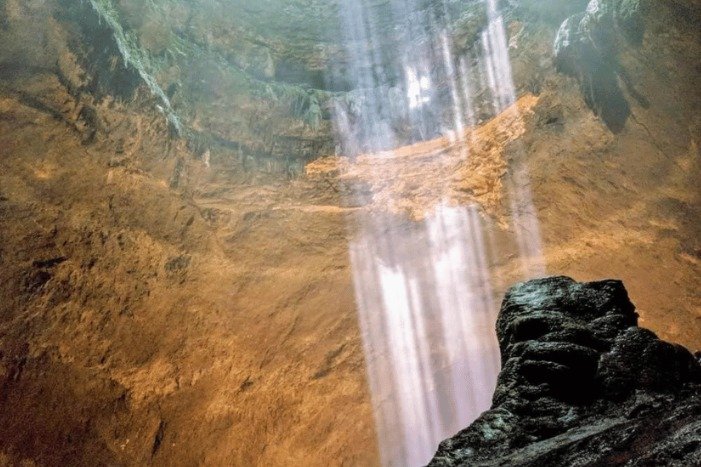
For travelers looking for an unforgettable underground adventure, the Jomblang Cave tour by GoaJomblang.com provides professionally guided excursions to one of Indonesia’s most captivating natural attractions. Their experienced team manages a safe and well-organized descent into the cave, allowing you to fully appreciate the stunning beauty of the “Light of Heaven.”