Hidden among the karst hills of Gunungkidul, Yogyakarta, Indonesia, Pindul Cave is more than just a beautiful underground river attraction. The cave carries a fascinating blend of geology, village life, and Javanese folklore.
Before we delve further into the main points of this article, we offer Jomblang Cave Tours for individuals or groups with your family or friends. Visit Goa Jomblang for more information.
Travelers today know it as one of the most popular cave-tubing destinations in Southeast Asia, but long before tourism arrived, Pindul Cave quietly served as part of the daily rhythm of local villagers.
No one knows the exact moment the cave was formed. What is certain, however, is that Pindul Cave was created naturally millions of years ago, far before recorded human history. The long corridors and underground river inside the cave developed through natural geological processes without any human intervention, and the local community continues to preserve its original condition to this day.
Interestingly, the cave’s name is connected to a legendary story involving a baby whose cheek struck a stone inside the cave. This tale has been passed down through generations and remains an important cultural explanation for how the cave received its unique name.
Read More: Pindul Cave Tourist Destination: Invite the Family for a Vacation in a Scenic Natural Environment
Natural Formation of Pindul Cave
Pindul Cave is part of the Gunungkidul karst landscape, a region dominated by limestone hills. Over millions of years, rainwater slowly dissolved the limestone. This process created underground passages, chambers, and a river that still flows through the cave today.
The cave was not carved by humans. Instead, water erosion gradually widened cracks in the rock until they formed a tunnel-like passage. The river inside the cave is constantly flowing, which helps keep the water clean and clear. Because there are no factories or heavy industrial activities nearby, the water has remained relatively uncontaminated.
Stalactites hang from the ceiling while stalagmites rise from the floor, forming dramatic natural sculptures. Some formations are massive and appear like stone pillars supporting the cave roof. These geological features make Pindul Cave not only a recreational site but also a natural classroom for learning about Earth’s history.
Before Tourism: A Village Utility
Before becoming a tourist attraction, Pindul Cave was simply part of everyday life for nearby residents. Villagers regularly came to the river for practical purposes rather than recreation.
Bathing and Daily Activities
The clean flowing water made the cave a natural bathing spot. For local residents, washing in the river was a normal daily routine. The constant current kept the water fresh, making it suitable for bathing.
Laundry activities also took place there. People washed clothes in the cave’s river, especially in the morning. Today, however, these activities are restricted, especially during visiting hours, to maintain cleanliness and comfort for tourists.
Fishing as a Food Source
Pindul Cave was also known as a strategic fishing location. Many fish lived in the underground river, and villagers relied on them as a source of daily protein. Even today, some residents still fish in the area, but usually at night to avoid disturbing visitors.
Guests who stay overnight nearby can sometimes experience traditional night fishing alongside locals, offering a rare cultural interaction not found in ordinary tourist destinations.
Sacred Perception and Local Beliefs
For a long time, only a few people dared to enter deep into Pindul Cave. The reason was not only limited equipment and lighting but also spiritual belief. Local communities considered the cave sacred.
In Javanese culture, caves often hold mystical meaning. They are believed to be connected to unseen realms or spiritual guardians. Because of this belief, people respected the cave and avoided exploring its interior without proper intention.
Even today, although tourism is active, some residents still treat the cave with reverence. Visitors sometimes feel nervous before entering, especially because of the darkness and echoing sounds of dripping water. However, once inside, the fear usually disappears and is replaced by amazement at the cave’s beauty.
Many travelers later describe their experience as unique, exciting, and unforgettable.
The Birth of a Tourist Destination
The transformation of Pindul Cave began relatively recently.
At the end of 2010, a community tourism awareness group formed by local residents initiated the idea of turning the cave into a tourism destination. The inspiration actually came from a university student from Gadjah Mada University (UGM) who was conducting a community service program (KKN) in Gelaran Hamlet.
The student initially conducted research about the rock formations and water depth inside the cave. After entering and witnessing its beauty, the research team realized the cave had strong potential as a special-interest tourism site.
Further studies were carried out to evaluate safety and feasibility. The local community, along with regional authorities, prepared equipment and visitor management systems. Finally, on October 10, 2010, Pindul Cave was officially inaugurated as a tourism attraction.
Since then, the cave has welcomed hundreds of thousands of visitors.
Safety and Visitor Experience
Today, tourists can explore the cave safely using standardized equipment provided by local operators. Visitors receive life jackets, helmets, and are guided by experienced instructors.
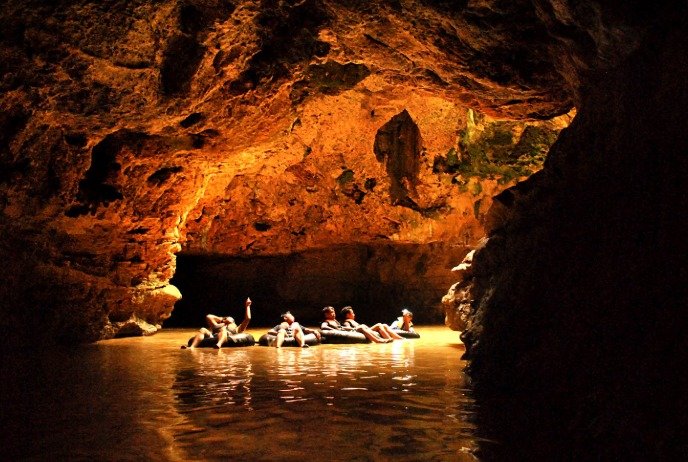
The main activity is cave tubing — floating along the underground river using inflatable tubes. The water is calm, and the cave ceiling is high enough to allow comfortable movement. Guides accompany every group to ensure safety and explain the cave’s history and formations.
Because of proper management and trained guides, visitors generally feel secure. What once was a mysterious and rarely entered cave has now become a friendly adventure destination accessible even to beginners.
The Legend Behind the Name “Pindul”
While geology explains how the cave formed, local folklore explains its name.
According to an ancient Javanese legend, the story begins during the era of the Mataram Kingdom. Ki Juru Mertani and Ki Ageng Pemanahan were sent by Panembahan Senopati to kill a baby boy born from the king’s daughter’s relationship.
However, the two envoys refused to carry out the order. Instead, they fled eastward toward the Gunungkidul region while carrying the crying infant.
Along the journey, the baby kept crying. To calm him, they decided to bathe him. Ki Juru Mertani climbed a hill and stepped firmly on the ground. With mystical power, the earth collapsed and created a large hole filled with flowing water — the cave.
They bathed the baby inside the newly formed cave. During the bathing process, the baby’s cheek accidentally struck a stone wall. In Javanese language, pipi kebendul roughly means “a cheek bumping into something.” From this event, the cave became known as Pindul Cave.
Tourism and Cultural Harmony
Even though it is now a famous destination, Pindul Cave remains community-managed tourism. Local residents operate guiding services, equipment rentals, and visitor facilities. This system allows tourism income to directly support the village economy.
At the same time, traditional respect toward the cave is preserved. Tourism activities are organized carefully to avoid environmental damage. Activities such as washing clothes are restricted during peak visiting hours, and fishing is limited to nighttime.
The balance between economic benefit and environmental conservation has become one of the key reasons for the site’s sustainability.
Why Visitors Love Pindul Cave
Many travelers arrive with hesitation. Entering a dark underground cave can feel intimidating. Yet the experience quickly changes once they float inside.
Soft sunlight enters through natural openings in the ceiling. Reflections shimmer on the water’s surface. Stalactites hang dramatically above visitors’ heads. The cave feels peaceful rather than frightening.
Online reviews frequently describe the place as “unique,” “fun,” and “memorable.” The combination of adventure, nature, and folklore makes it unlike ordinary tourist attractions.
Conclusion
Pindul Cave is a remarkable example of how natural history and cultural storytelling can exist together. Formed naturally millions of years ago, the cave once served as a simple village resource for bathing, washing, and fishing. Later, through local initiative and academic research, it transformed into one of Yogyakarta’s most iconic attractions.
Yet the most captivating part of Pindul Cave may not be its geology, but its legend — the story of a baby whose cheek struck a cave wall and gave the place its name. Whether taken as folklore or symbolism, the story enriches the visitor experience and connects modern tourism with ancient tradition.
Today, Pindul Cave stands as more than a destination. It is a living heritage site where nature, community, and myth flow together just like the underground river within it. Visitors do not simply explore a cave; they enter a story that has traveled across generations.
For travelers looking for an unforgettable underground adventure, the Jomblang Cave tour by GoaJomblang.com provides professionally guided excursions to one of Indonesia’s most captivating natural attractions. Their experienced team manages a safe and well-organized descent into the cave, allowing you to fully appreciate the stunning beauty of the “Light of Heaven.”
Read More: A List of Caves in Gunungkidul: Check Opening Hours and Ticket Prices