Yogyakarta, often called Jogja, is not only famous for temples and cultural heritage. Over the past decade, it has also become one of Indonesia’s top destinations for adventure tourism.
Before we delve further into the main points of this article, we offer Jomblang Cave Tours for individuals or groups with your family or friends. Visit Goa Jomblang for more information.
Hidden behind its karst hills and rural landscapes lies a fascinating underground world filled with rivers, vertical shafts, and ancient limestone formations. Visitors who love nature and outdoor activities often hear two popular terms when planning their trip: cave tubing and caving.
At first glance, both activities sound similar because they take place inside caves. Many travelers even assume they are the same thing. In reality, they are completely different experiences.
Understanding the difference between cave tubing and caving in Jogja is important before choosing which activity fits your travel style, physical condition, and expectations.
Simply put, cave tubing is a relaxed underground river adventure using an inflatable tube, while caving is a technical exploration of caves that involves climbing, rappelling, and navigating dark passages. Both are unforgettable, but they offer very different levels of excitement, risk, and preparation.
Read More: A Brief History of Pindul Cave, Formed from the Baby’s Cheeks?
Understanding Jogja’s Karst Landscape
Before comparing the activities, it helps to know why Jogja has so many caves. The southern part of Yogyakarta, especially Gunungkidul Regency, sits on a massive limestone region called the Gunung Sewu Karst Area. This geological formation was created millions of years ago when the area was once an ancient seabed.
Over time, rainwater slowly dissolved the limestone, forming underground rivers, sinkholes, stalactites, and stalagmites. Some caves contain flowing water, while others are dry vertical caverns. Because of this unique geology, Jogja offers both water-based cave adventures and technical cave exploration in one destination.
This is why tourists often debate the difference between cave tubing and caving in Jogja when choosing their adventure itinerary.
What Is Cave Tubing?
Cave tubing is a recreational activity where visitors float along an underground river inside a cave using an inner tube. Participants wear life jackets and helmets, then gently drift through calm waters while enjoying the cave scenery.
Unlike extreme sports, cave tubing focuses on relaxation and sightseeing rather than physical challenge. The movement is mostly guided by the river’s current, and trained guides accompany participants throughout the journey.
Main Characteristics of Cave Tubing
- Floating on an inflatable tube
- Following a natural underground river
- Guided by local instructors
- Minimal physical effort required
- Safe for beginners and families
The experience feels almost magical. Sunlight sometimes enters through cave openings, illuminating rock formations that have taken thousands of years to form.
Popular Cave Tubing Locations in Jogja
The two most famous cave tubing destinations are:
Goa Pindul
This is the most popular cave tubing site in Yogyakarta. Visitors float across a wide underground river while looking up at stalactites hanging from the cave ceiling. The water is calm, making it suitable for children and first-time adventurers.
Kalisuci Cave
Kalisuci offers a slightly longer route and clearer water. Travelers float through a narrower cave passage and occasionally walk along shallow sections of the river.
Purpose of Cave Tubing
The main goal is recreation. Tourists come to:
- Relax
- Enjoy nature
- Take photos
- Experience a cave without difficulty
Because of its gentle nature, cave tubing is often considered eco-tourism rather than an extreme sport.
Intensity Level
Low intensity.
You do not need athletic ability, special training, or prior experience. As long as you can follow instructions and wear safety equipment, you can participate comfortably.
What Is Caving?
Caving, also known as spelunking, is a true cave exploration activity. Instead of floating on water, participants physically enter, descend, and navigate through a cave system. This may include walking, climbing, crawling, and rappelling down vertical shafts.
In Jogja, caving is significantly more challenging and requires professional guidance. It is not a casual sightseeing activity but a real adventure.
Main Characteristics of Caving
- Walking through cave passages
- Rappelling into vertical caves
- Crawling through narrow tunnels
- Using ropes and harnesses
- Requires safety training and proper gear
The activity is closer to mountaineering than tourism.
Famous Caving Destination in Jogja
Goa Jomblang
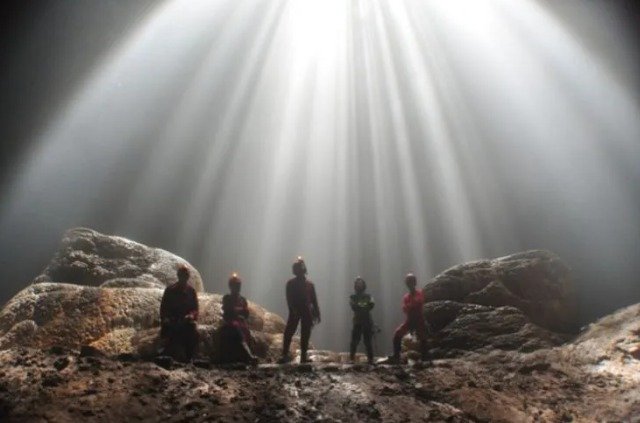
Goa Jomblang is one of the most famous vertical caves in Southeast Asia. Visitors descend approximately 60 meters into a massive sinkhole using a rope system. At the bottom lies an ancient forest ecosystem and a tunnel leading to the famous “Light of Heaven,” where sunlight streams into the cave dramatically.
This site is the best example when discussing the difference between cave tubing and caving in Jogja because it requires both courage and physical effort.
Purpose of Caving
Unlike cave tubing, the goal of caving is exploration. Participants often aim to:
- Discover geological formations
- Experience adventure
- Study cave environments
- Challenge physical endurance
For some travelers, it becomes a once-in-a-lifetime expedition.
Intensity Level
High intensity.
Participants must be physically fit and ready for climbing, rope descent, and long walks in humid environments.
Key Differences Between Cave Tubing and Caving
1. Activity Type
Cave tubing involves floating on water.
Caving involves physically exploring the cave terrain.
In cave tubing, the river carries you. In caving, you move yourself.
2. Adventure Level
Cave tubing is relaxing and scenic.
Caving is thrilling and challenging.
If cave tubing feels like a natural lazy river inside a cave, caving feels like entering a real expedition.
3. Physical Requirements
Cave tubing requires minimal effort.
Caving demands strength, stamina, and courage.
This point alone explains much of the difference between cave tubing and caving in Jogja.
4. Equipment
Cave tubing equipment:
- Helmet
- Life jacket
- Inner tube
Caving equipment:
- Harness
- Rope system
- Gloves
- Special boots
- Headlamp
The equipment difference clearly shows the level of risk involved.
5. Safety Level
Cave tubing is considered low risk when guided.
Caving carries moderate risk and must be supervised by trained professionals.
6. Suitable Participants
Cave tubing:
- Families
- Children
- First-time travelers
- Casual tourists
Caving:
- Adventure seekers
- Physically fit adults
- Outdoor enthusiasts
7. Duration
Cave tubing trips usually last 1–2 hours.
Caving trips can take 3–6 hours depending on conditions.
Experience Comparison
To better understand the feeling, imagine two different travelers.
A family on vacation chooses Goa Pindul. They float slowly, laugh, take photos, and enjoy the cool cave air. Their adventure is peaceful and memorable.
Meanwhile, a group of adventurers enters Goa Jomblang. They wear harnesses, descend by rope into darkness, and walk through muddy tunnels before witnessing sunlight breaking into the cavern. Their experience is intense and dramatic.
Both are amazing — but completely different.
Which One Should You Choose?
Choosing depends on your personality and travel goals.
Choose cave tubing if you:
- Want a relaxing vacation activity
- Travel with children
- Prefer safe outdoor experiences
- Do not like heights
Choose caving if you:
- Love adrenaline
- Enjoy physical challenges
- Want a unique adventure
- Are comfortable with heights and darkness
When tourists ask about the difference between cave tubing and caving in Jogja, the real question is not which is better — but which is better for you.
Preparation Tips
For Cave Tubing
- Wear quick-dry clothing
- Bring sandals or water shoes
- Protect your phone with a waterproof bag
- Follow the guide’s instructions
For Caving
- Eat before the trip
- Wear comfortable outdoor clothing
- Prepare for mud and darkness
- Listen carefully to safety briefings
- Be mentally ready for heights
Why Jogja Is Perfect for Both Activities
Few destinations in Southeast Asia offer both beginner-friendly cave adventures and professional cave exploration in one area. Jogja’s tourism infrastructure, trained guides, and accessible locations make it ideal.
You can even try both activities in one trip: relax with cave tubing one day and challenge yourself with caving the next.
Conclusion
The difference between cave tubing and caving in Jogja lies primarily in the nature of the activity and the level of adventure. Cave tubing is a calm water-based recreational experience where visitors float through underground rivers, ideal for beginners and families. Caving, on the other hand, is a technical and physically demanding exploration involving climbing, rappelling, and navigating cave passages, best suited for thrill seekers and outdoor enthusiasts.
In short, cave tubing is leisure tourism inside a cave, while caving is true cave exploration.
Whether you choose to peacefully drift through Goa Pindul or descend dramatically into Goa Jomblang, both experiences reveal the hidden beauty beneath Yogyakarta’s surface. Jogja does not just offer destinations above ground — its real wonders may lie underground, waiting for you to discover them.
For travelers looking for an unforgettable underground adventure, the Jomblang Cave tour by GoaJomblang.com provides professionally guided excursions to one of Indonesia’s most captivating natural attractions. Their experienced team manages a safe and well-organized descent into the cave, allowing you to fully appreciate the stunning beauty of the “Light of Heaven.”
Read More: Pindul Cave Tourist Destination: Invite the Family for a Vacation in a Scenic Natural Environment